How to convince customers to choose a KNX system?
- KNX Vietnam

- Apr 4
- 5 min read
Customers looking for smart home and building automation solutions are not uninformed — if you cannot demonstrate the real value KNX delivers, they will not invest in it. This is a reality every KNX engineer and system integrator needs to acknowledge honestly.

In an era where information about smarthome technology is everywhere, most customers have already researched and compared their options before sitting down to speak with you. They know about Zigbee, Z-Wave, Matter, and the countless wireless systems being aggressively marketed at lower price points. The question is: how do you, as a KNX engineer or system integrator, convince them that KNX is genuinely the best choice for their needs?
1. Start by listening — not by presenting
The most common mistake during the initial consultation phase is that engineers rush to present technical specifications, device lists, and quotations — before the customer has a clear understanding of what they actually want and need.
The first and most important step is to invest time in a genuine, in-depth conversation with the customer about their concerns, expectations, and personal preferences for an automation system. This is not a social courtesy — it is a strategic foundation.
When you do this before anything else, you position yourself as a trusted advisor — not as someone trying to sell. Customers sense this difference clearly.
Every customer has a different reason for being interested in automation: some want to reduce electricity costs, some want enhanced security, some want greater convenience in daily life, and others want to increase the long-term value of their property. When you correctly identify each customer's real motivation, it becomes significantly easier to define the scope of work, establish a realistic budget, and propose a KNX solution that is genuinely appropriate — rather than a one-size-fits-all standard package imposed on every project.
2. Sell the benefits of functions — not individual devices
KNX has a core sales principle applied globally: "Sell functions, not devices."
This principle sounds straightforward, but in practice, many system integrators still make the mistake of presenting their proposal as a device list — lighting control modules, motion sensors, touch switches, switching actuators. This approach is not only tedious for customers but fails to convey the real value a KNX system delivers.
Consider a different approach. Instead of describing an "8-channel blind actuator", describe a specific operating scenario.
When a customer says they want a simple and reliable solution for their bedtime routine — they want to be certain the door is locked, all lights are off throughout the house, blinds are closed, and the security system is armed — rather than listing devices, describe a single button labelled "Good Night". With one touch, the entire sequence of actions executes automatically within seconds. That is what KNX does — and that is what customers are actually buying.
When you think and present in terms of "complete events" rather than "individual devices", customers begin to understand why KNX offers superior value compared to conventional or low-cost wireless systems — because no other system allows the same level of integration, customisation, and long-term reliability.
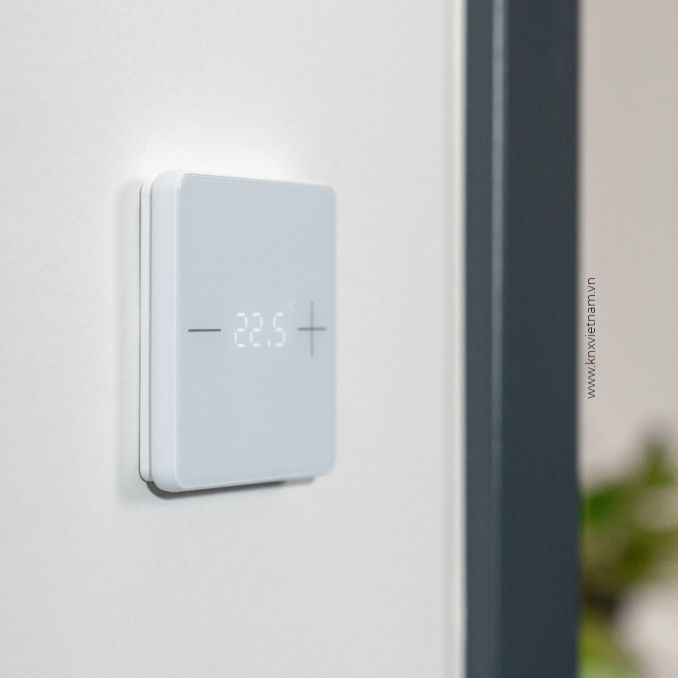
Some practical scenario examples that resonate well with customers:
"Leaving Home" scene: A single action turns off all lights, shuts down air conditioning, lowers the refrigerator to an energy-saving mode, locks the door, and activates cameras and the alarm system.
"Welcome Home" scene: The system detects the homeowner's arrival via sensor or app, automatically activates lighting to their preferred settings, adjusts temperature, and plays background music.
"Meeting Mode" scene: In an office, one press lowers the blinds, dims surrounding lights, activates presentation lighting, turns on the display screen, and adjusts the air conditioning.
These scenarios do not describe devices — they describe experiences. And it is experience that customers are willing to pay for.
3. Visualisation is the key to closing projects
One of the greatest barriers in KNX consultation is the gap between what the engineer understands and what the customer can actually picture. You may be proposing the best, most appropriate, most cost-efficient solution — but if the customer cannot visualise how it will operate in practice, they will not be able to see its value, and therefore will not commit to the investment.
This is why visual documentation is the most important sales tool in a KNX project — no less critical than technical drawings or cost estimates.
An effective set of visual documentation for customers should include a floor plan showing the location of each device and control zone, a list of operating scenarios described in plain language rather than technical terminology, a clear explanation of what the system can and cannot do within the project scope, and interface illustrations showing how controls will look and feel.
When customers can read and understand the documentation themselves without needing the engineer to explain everything continuously, that is the moment they begin to feel the professionalism and thoroughness of your approach — and that is the foundation of trust.
4. The long-term advantages of KNX that customers need to understand
Beyond operating scenarios and user experience, there are several long-term technical advantages of KNX that engineers should proactively present to customers — particularly those weighing KNX against lower-cost wireless alternatives.
Independence from any single manufacturer: With more than 500 manufacturers and 8,000 KNX-certified products worldwide, customers are not locked into any single brand. If a manufacturer ceases operations or discontinues a product line, the KNX system can still be maintained and expanded using equipment from another manufacturer.
Longevity and backward compatibility: KNX devices installed 20 to 30 years ago remain fully compatible with current ETS software and the latest devices available today. This is a commitment to a standard that no other smarthome system can match.
Measurable energy savings: This is not a marketing promise — these are real figures published by KNX Association and verified across projects worldwide: up to 60% energy savings in lighting and ventilation when the system is fully integrated.
No dependency on internet or cloud services: The entire control logic of a KNX system operates locally. The system does not fail when internet connectivity is lost, is not affected if a cloud service provider shuts down, and carries no concern about personal usage data being transmitted to overseas servers.
5. Consultative skill — the most important competitive advantage of a KNX engineer
In an increasingly competitive smart home and building automation market, technical skill is a necessary condition — not a sufficient one. What distinguishes a good KNX engineer from an exceptional one is the ability to translate complex technical language into value that customers can understand and feel.
This is also why rigorous KNX training goes beyond ETS programming skills and topology design — it develops the mindset of designing systems around the needs of the end user. A KNX Partner-certified engineer understands that every project does not begin with a wiring diagram — it begins with a conversation with the customer.
When you combine solid technical competence with effective consultation and visualisation skills, you do not merely convince customers to choose KNX — you build long-term trust, generate a sustainable base of referred clients, and establish your professional standing firmly within the industry.


-02.png)
Este artículo ofrece ideas muy útiles sobre cómo entender las necesidades del cliente antes de presentar una solución tecnológica. Me parece especialmente interesante la importancia de explicar beneficios y experiencias en lugar de centrarse únicamente en dispositivos. Además, la visualización clara ayuda a generar confianza y facilita la toma de decisiones. Incluso conceptos como números de la suerte por signo pueden despertar curiosidad y conversación entre diferentes públicos.
Mình có lần lướt đọc mấy trao đổi trên mạng شيخ روحاني thì thấy nhắc nên cũng tò mò mở ra xem thử cho biết. Mình không tìm hiểu sâu rauhane chỉ xem qua trong thời gian ngắn để quan sát bố cục s3udy cách sắp xếp các mục và trình bày nội dung tổng thể. Cảm giác là các phần được trình bày khá gọn, các mục rõ ràng nên đọc lướt cũng không bị rối Berlinintim, với mình như vậy là đủ để nắm tin cơ bản rồi. q8yat